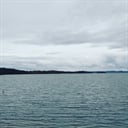
Which island is the tree lobster native to?
'Dryococelus australis', commonly known as the Lord Howe Island stick insect or tree lobster, is a species of stick insect that lives on the Lord Howe Island Group, an island in Australia. It is the only member of the monotypic genus 'Dryococelus' and was thought to be extinct by 1920, only to be rediscovered in 2001. It is extirpated in its largest former habitat, Lord Howe Island, and has been called "the rarest insect in the world", as the rediscovered population consisted of 24 individuals living on the small islet of Ball's Pyramid.
Adult Lord Howe Island stick insects can measure up to 20 centimeters (8 in) in length and weigh 25 grams (1 oz), with males 25% smaller than females. They are oblong in shape and have sturdy legs. Males have thicker thighs than females. Unlike most phasmida (a type of insects), the insects have no wings, but are able to run quickly.
The behavior of this stick insect is highly unusual for an insect species, in that the males and females form a bond in some pairs. The females lay eggs while hanging from branches. Hatching can happen up to nine months later. The nymphs are first bright green and active during the day, but as they mature, they turn black and become nocturnal. Reproduction can happen without the presence of males (parthenogenesis) and this quality has allowed the species to survive when they are low in numbers.
More Info:
www.science.org